
Arrest History in Orange County
Orange County arrests may begin with the Sheriff's Office, Orange Police Department, Vidor Police Department, Bridge City Police Department, West Orange Police Department, Pinehurst Police Department, a county constable, or Texas DPS Highway Patrol. The agency that made the arrest owns its incident and arrest report. The Orange County Jail creates the separate booking and custody record when a person is taken there.
A full history is not one continuous county file. It is a set of records tied to the same event. The agency report describes the allegation and officer actions. The jail roster shows custody, charge, bond, and warrant data. A later clerk file shows what was actually prosecuted. DPS receives reportable fingerprint-based cycles and later dispositions from Texas justice agencies.
The route changes with the arresting agency. Orange Police records stay with Orange Police, even when the person is booked into the county jail. Vidor, Bridge City, West Orange, and Pinehurst reports remain with their own departments. A Texas trooper report follows the DPS open-record channel. The common jail destination does not make OCSO the owner of each underlying incident report.
Orange County Live Arrest Roster
The official OCSO roster is free and requires no login. It displays a roster date, total inmate count, 15 results per page, sorting, filters, pagination, and a View Details action. Searchable fields include Sheriff's Office number, displayed name, birth date, age, race, gender, Offense ID, arrest date, and book memo. The detail view adds the offense, warrant, court, fine, and bond fields.
The Orange County Corrections Information hub routes users to the live roster and current jail forms.
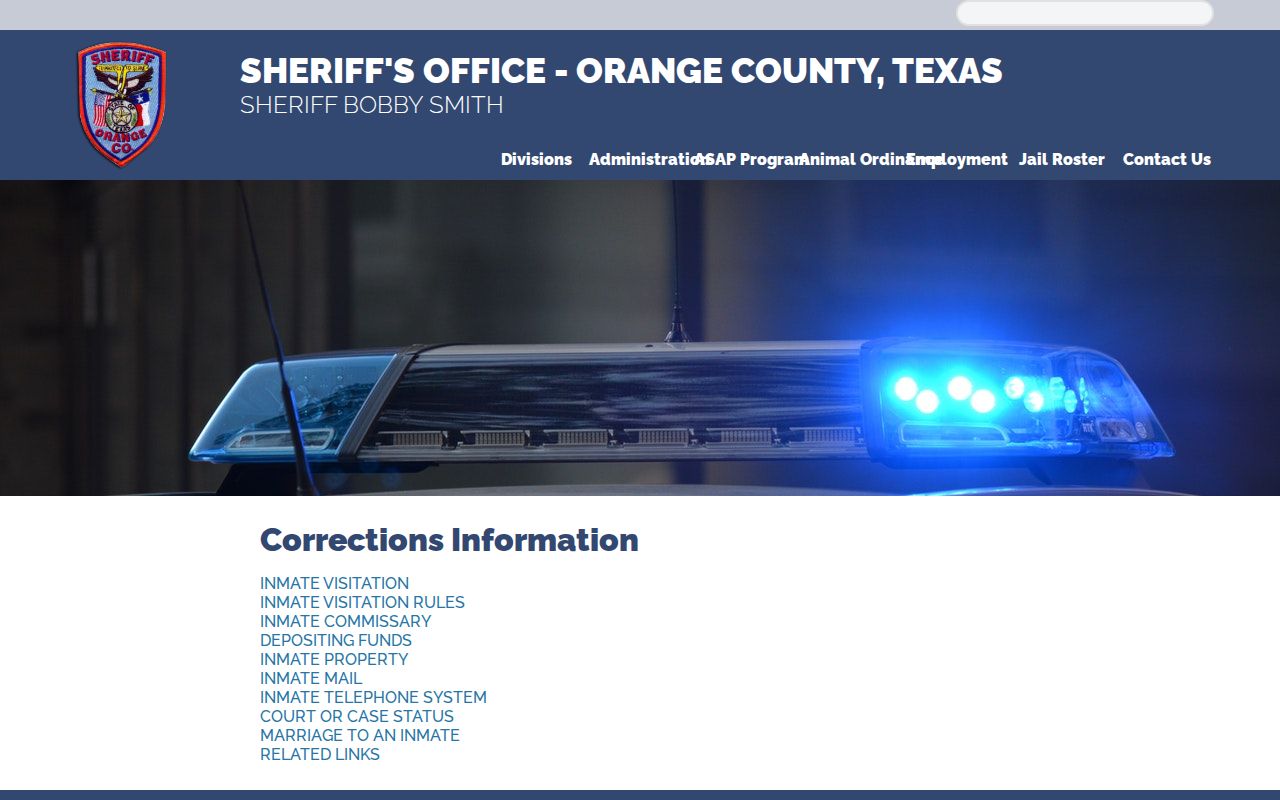
The hub is also the safer source for live visitation, mail, phone, deposit, property, and court-status instructions because vendors and fees can change.
How to Look Up Orange County Arrests
Start with the official current-custody roster, but keep moving when it does not answer the question. A person may have been released, transferred, cited without jail, booked under another spelling, or held outside Orange County. Every documented access channel has a different role.
- Search the OCSO live roster and open View Details. Note the SO number, arrest date, Offense ID, court code, warrant number, and bond data.
- If no current entry appears, call the Orange County Jail at 409-883-2612 and ask whether the person was released or transferred.
- Request the incident or arrest report from the agency that made the arrest. Use sorecords@co.orange.tx.us for an OCSO record.
- After filing, contact the District Clerk for a felony, County Clerk for a Class A or B misdemeanor, or the issuing municipal or justice court for a fine-only matter.
- Use the DPS public conviction search for reported Texas convictions or deferred adjudications. For one's own identity-based record, use the FAST fingerprint review.
- Switch to TDCJ for state-prison custody or the Bureau of Prisons locator for federal custody.
Orange County government also explains written public-record handling on its official open-records page.
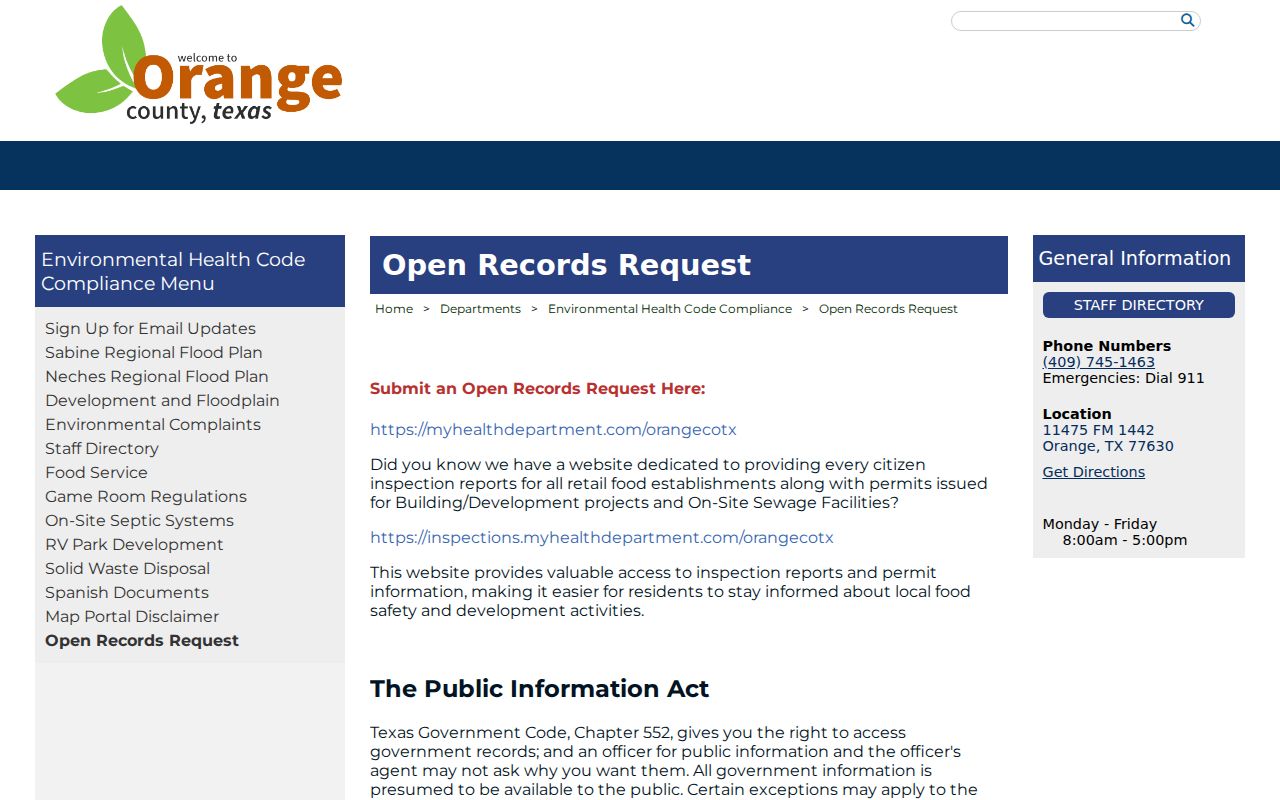
Address a written request to the office that actually created the record. The county page is not a universal sheriff request portal.
Who Owns Orange County Arrest Reports
OCSO does not hold every city police report. Send a narrow request to the arresting agency and identify the event number, incident or booking number, person's name, date and time range, location, and desired format when known. Ask for the exact item, such as an offense report, arrest report, booking sheet, CAD or 911 record, or body-camera recording.
Orange County Sheriff's Office
Records and Corrections Facility
205 S. Border St.
Orange, TX 77630
409-883-2612
sorecords@co.orange.tx.us
No current OCSO criminal-report fee schedule or sheriff-specific request form was found in official sources. Confirm payment, identification, lobby hours, and electronic delivery before relying on a request method. Do not assume the record is free.
Texas body-camera requests require extra precision. Provide the date and approximate time, the location, and the name of one or more known subjects. A broad request for every video tied to a name may not give the agency enough information to locate the recording. The same narrow approach helps with CAD logs and 911 audio.
Note: Active investigations, juvenile data, protected victim information, medical details, and security-sensitive material may be withheld or redacted.
What an Arrest Record Shows
An agency report can include an event number, time and place, officer, probable-cause narrative, alleged statute, warrant basis, evidence, witnesses, and transport. The jail entry focuses on intake and custody. OCSO's public roster exposes full dates of birth, but it does not show a public mugshot, final prosecutor action, release date, housing pod, hearing date, or downloadable court documents in the inspected detail.
| SO Number | Internal sheriff booking or person key used to distinguish roster entries. |
|---|---|
| Arrest Date | Custody date shown on the live roster, not the conviction date. |
| Offense ID | Charge-cycle identifier associated with the booking detail. |
| Charge and Court | Holding offense description and court code, which may differ from the filed case. |
| Bond and Warrant | Charge-specific bond amount or number, warrant number, and any listed fine. |
| Booking Photo | Created in the agency system, but no mugshot appeared in the inspected public roster detail. |
| Final Outcome | Not shown. Use the clerk's case file for prosecutor action and disposition. |
Orange County Booking Record Flow
A local arrest moves through several hands. Officers create the incident and probable-cause record. Jail staff inventory property, perform medical and security screening, enter demographics, capture a photo and fingerprints, and add charges or warrants. A magistrate then advises rights and considers release conditions. Texas generally requires prompt magistration without needless delay and within 48 hours.
Record flow: Arrest → Booking → Magistration → Prosecutor Review → Court Filing → Disposition Reporting
Reportable Class B or greater arrests, plus certain limited Class C events, reach DPS CCH through fingerprints and tracking numbers. Later prosecutor and court outcomes should return through the reporting chain. Timing and identifiers explain why an Orange County jail charge may not match the indictment or judgment.
Warrants create another branch. OCSO enters felony and Class A or B warrants and answers inquiries by phone or email because it does not advertise a county name-search portal. Class C warrants stay with the issuing justice or municipal court. After execution, the jail detail may show the warrant number, court, bond, and fine, but sealed and juvenile warrants remain outside public view.
Recent Arrests and Booking Logs
The OCSO live roster is the official current-booking channel. Its 15-row pages can be sorted and filtered with comparison options such as equals, contains, starts with, range, and list matching. View Details opens charge-level warrant, fine, court, and bond data. These controls are useful for finding a current entry without browsing every page.
The roster is not a permanent arrest blotter. Entries may roll off after release or transfer, and an absence proves little about past Orange County arrest history. Orange Police publishes an annual aggregate UCR report, not a named arrest list. The 2025 city report counted crime and clearances, not individual bookings.
The Texas DPS crime-data portal is the source for agency-level aggregate reporting.
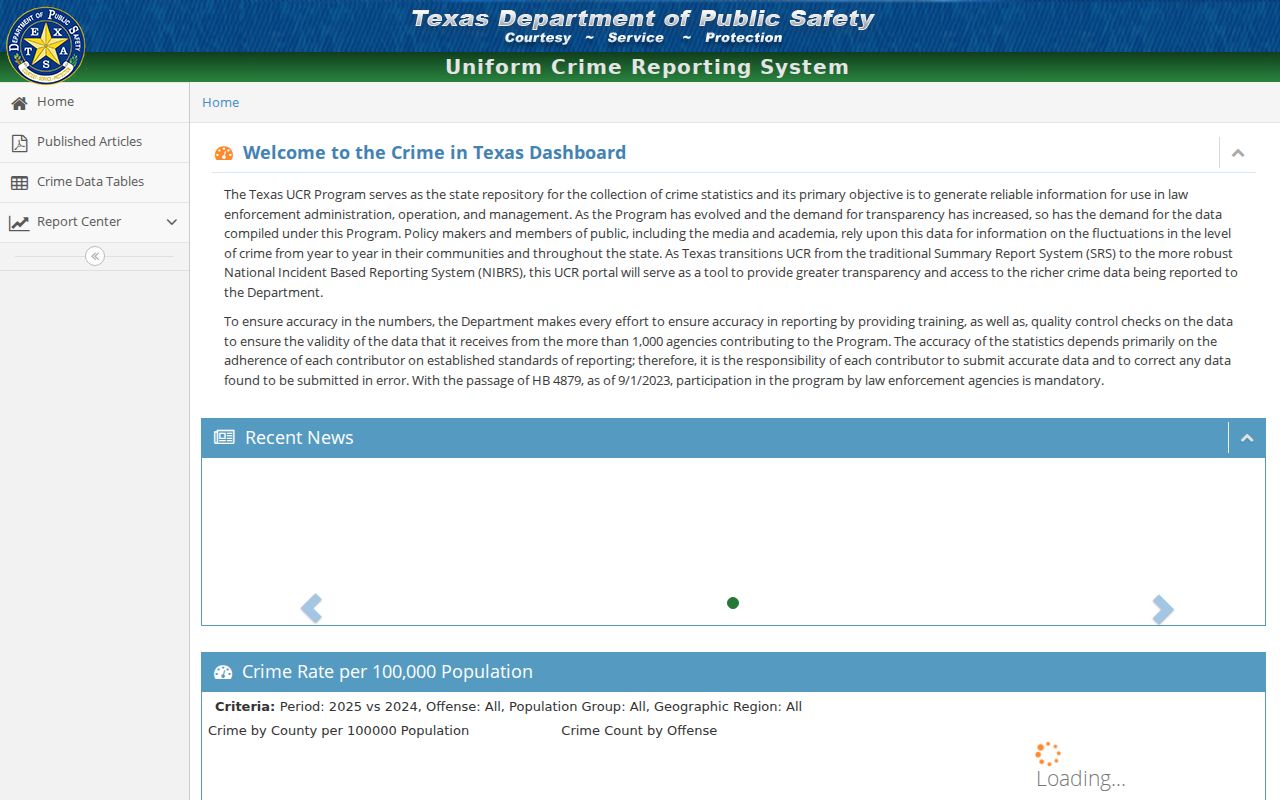
Aggregate crime data can give context, but it cannot confirm that a named person was arrested.
Orange County Custody Transfers
A county jail and a state prison locator answer different questions. Orange County Jail records cover local pretrial detention and county custody. Once a person enters the Texas prison system, search the TDCJ Online Inmate Search. It accepts a last name and first initial; telephone or email inquiries need a TDCJ or SID number, or an exact birth date when those numbers are unknown.
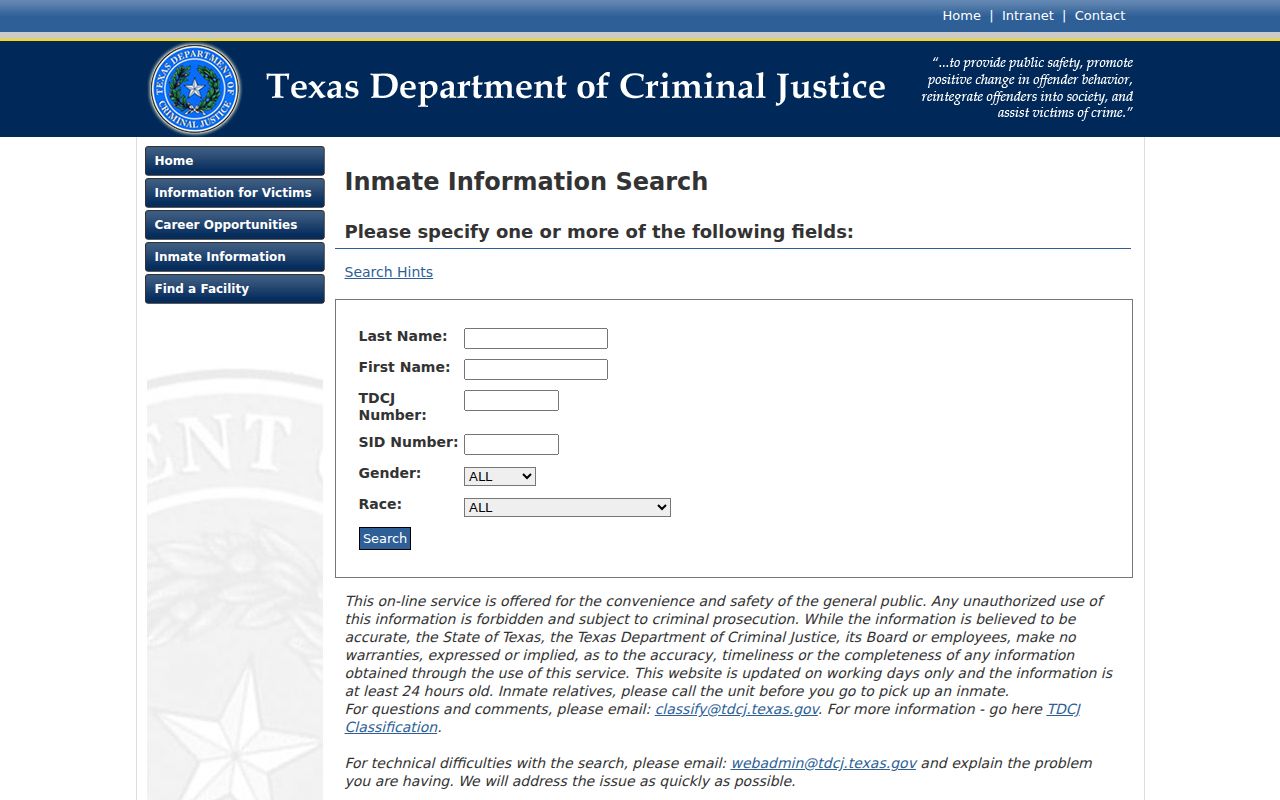
A TDCJ hit can show prison custody and release information, but it does not replace the Orange County arrest report or court judgment.
Federal custody follows another path. The Bureau of Prisons Inmate Locator searches federal records by name or federal identifier.
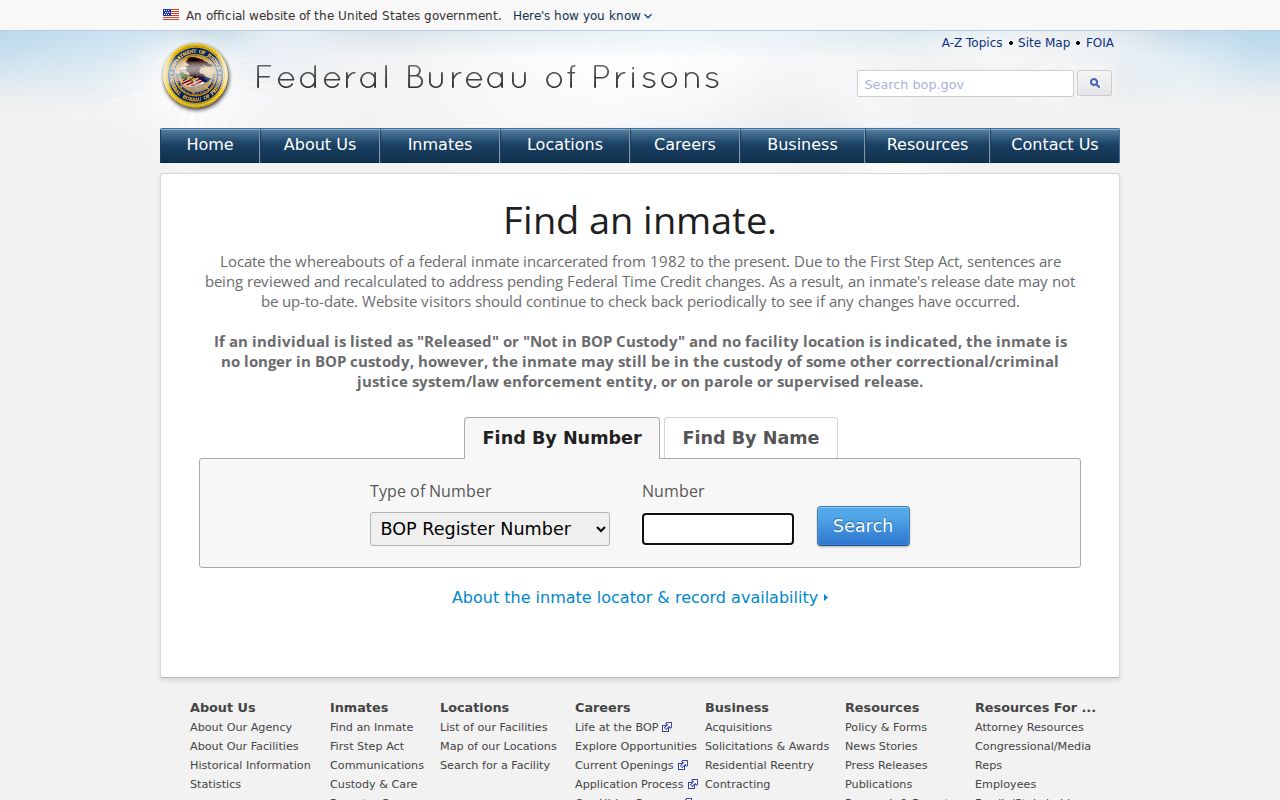
Orange County lies in the Eastern District of Texas, so a federal detention trail may never appear in the county roster or Texas-only DPS product.
Arrests vs Convictions
An arrest records an accusation and custody event. A conviction records a court finding of guilt. Orange County agencies create the first, while clerks preserve the second in the court file and DPS compiles reportable public convictions and deferred adjudications. A booking may end without charges, through dismissal, or in acquittal. Even then, the arrest is not automatically erased.
| Arrest Record | Conviction Record |
|---|---|
| Created by the arresting agency and jail | Created through the court judgment |
| Shows an arrest or booking occurred | Shows a finding of guilt |
| Held by the agency and custody system | Held by the clerk and reported to DPS |
| May end in release, no charge, dismissal, or filing | May lead to sentence, appeal, nondisclosure, or other relief |
Note: An arrest is not proof of guilt, and an Orange County booking charge can change or disappear after prosecutor review.
Correcting Orange County Arrest Cycles
When a DPS history shows the wrong outcome or lacks a final disposition, first identify the Orange County clerk that owns the case. Obtain a certified judgment or dismissal. DPS requires certified court documents for its error-resolution process. A name-only public search is not the right tool for confirming identity; a person's FAST fingerprint review provides the stronger match for self-review.
A dismissal does not itself delete the arrest and booking cycle. Texas expunction under Code of Criminal Procedure Chapter 55A and orders of nondisclosure under Government Code Chapter 411 have different effects and eligibility rules. Relief is fact-specific. After any signed order, monitor the clerk, DPS record, and affected custodians for processing.
Identity errors need care. Compare the event date, court, charge, and available numeric identifiers before requesting a correction. The clerk can certify its own disposition, but it cannot rewrite an arresting agency report. Send each correction to the record owner, and provide DPS with the certified court material it requires for a state-cycle update.
For the broader prosecution trail, the Orange County criminal court case record shows the filed charge and disposition that the roster lacks.