
How to Check Criminal History in Orange County
Begin with the event and its likely court level, not with a broad name search. A recent Orange County arrest may first appear in jail custody data. A filed felony belongs with the District Clerk, which serves the 128th, 163rd, and 260th District Courts. The County Clerk keeps Class A and B misdemeanor criminal minutes. A fine-only city or ordinance matter stays with the municipal or justice court that heard it. This split is why the same name can yield different facts at each office.
Use a full legal name, spelling variants, an approximate date, and a case, incident, booking, or warrant number when known. Date of birth can help distinguish common names, but send only the details the custodian needs. The best sequence is:
- Identify whether the starting record is an arrest report, booking, court case, warrant, or statewide history.
- Contact the agency that made the report or the clerk for the court level involved.
- Compare names and dates before treating a search result as the right person.
- Trace the booking charge into the filed court case, since prosecutors may reject or change it.
- Request a certified judgment or a fingerprint personal review when identity and final outcome must be confirmed.
Orange County’s official online-records landing page shows the county access point captured below.
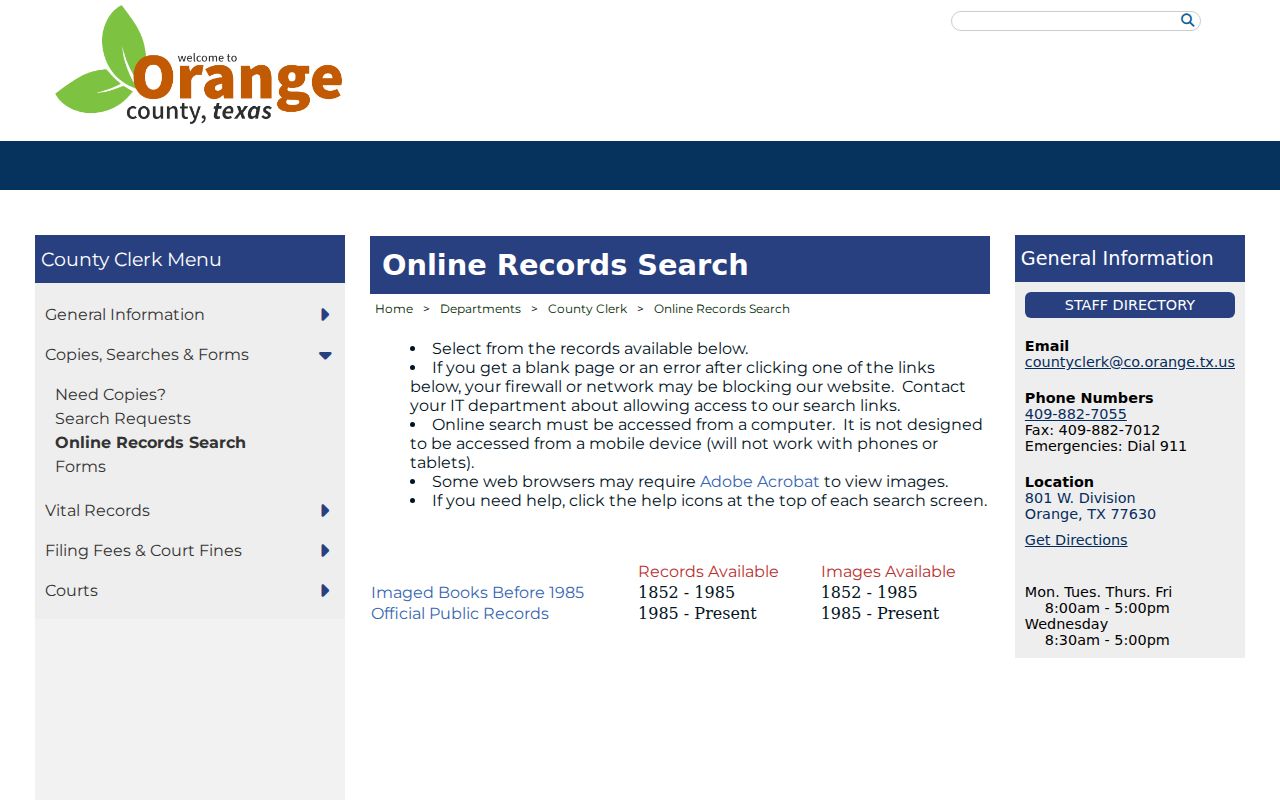
The landing page is only one route. Its own warnings make the clerk counter, public computers, mailed searches, and direct office contact vital fallbacks.
Three Layers of Orange County Records
An Orange County justice event can produce three records that answer three different questions. The arresting agency and Orange County Jail show what officers alleged and when custody began. The County or District Clerk shows what prosecutors filed, how the case moved, and what the court decided. The Texas Department of Public Safety receives reportable, fingerprint-linked events and later disposition reports for the Computerized Criminal History system.
The flow is: Arresting agency and jail → prosecutor and Orange County clerk → Texas DPS CCH. Timing matters at every stage. A booking can appear before a cause number exists. A court charge can differ from the holding charge. A disposition can reach DPS after the clerk has entered it. When facts conflict, return to the office that created that part of the record instead of treating one portal as a complete master file.
The DPS search-help page explains how the state name product fits into that chain.

The help material reinforces the main limit: a state name candidate does not replace the Orange County source record or fingerprint identification.
- Booking record
- The Orange County custody entry, with intake, charge, bond, and release facts, but no finding of guilt.
- Court file
- The pleadings, settings, orders, judgment, sentence, and final disposition kept by the proper clerk.
- CCH entry
- The fingerprint-linked Texas compilation built from agency, prosecutor, court, and custody reporting.
Official Texas Background Checks
The Texas Department of Public Safety offers a public Criminal History Conviction Name Search. It returns Texas conviction and deferred-adjudication information that law makes public. An account and search credits are required. One $1 credit permits a search and viewing of matching records, while a card purchase adds 2.25 percent per credit and a $0.25 transaction fee. DPS also lists a $10 offline name check. These name products depend on the details entered and are not fingerprint identification.
For review of your own Texas record, DPS directs applicants to FAST fingerprint capture through IdentoGO. DPS lists a $15 fingerprint record fee plus a $10 FAST fingerprint fee for its personal-review check. Use the correct service code, current identification, and the live location finder because no Orange County capture site was confirmed in the official research. For a federal self-review, the FBI Identity History Summary uses fingerprints and carries an $18 FBI fee.
| Official product | Identity basis | Scope | Published fee |
|---|---|---|---|
| DPS online search | Name and demographics | Public Texas convictions and deferred adjudications | $1 credit, plus card surcharge |
| DPS offline search | Name and demographics | Public Texas product | $10 |
| DPS FAST personal review | Fingerprints | Your Texas CCH record | $15 plus $10 FAST |
| FBI Identity History Summary | Fingerprints | FBI-maintained identity history | $18, plus any channeler fee |
The official IdentoGO FAST enrollment screen shows the appointment channel used for Texas fingerprint service.
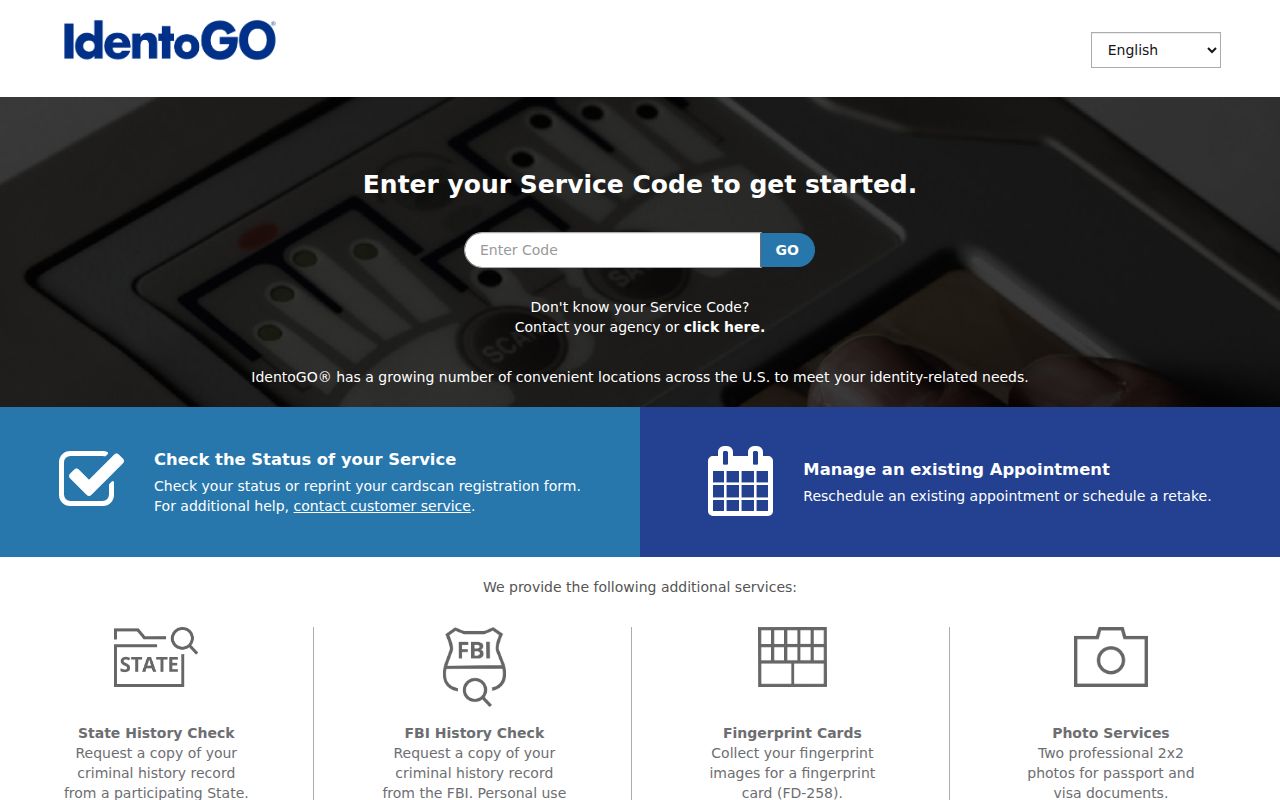
The service-code step routes the request to the right program, so applicants should not guess a code or rely on an old appointment location.
DPS Name Searches in Orange County
A DPS public search is useful when the question extends beyond Orange County, but it must be read as a candidate match. Searchers enter last and first name, may add middle name and date of birth, and can narrow by sex and race. The portal also provides exact or similar-name logic. A result may return no candidate, one candidate, or several. Compare every available identifier before drawing a conclusion.
The Texas DPS Criminal History Conviction Search is the official public name-search entry.
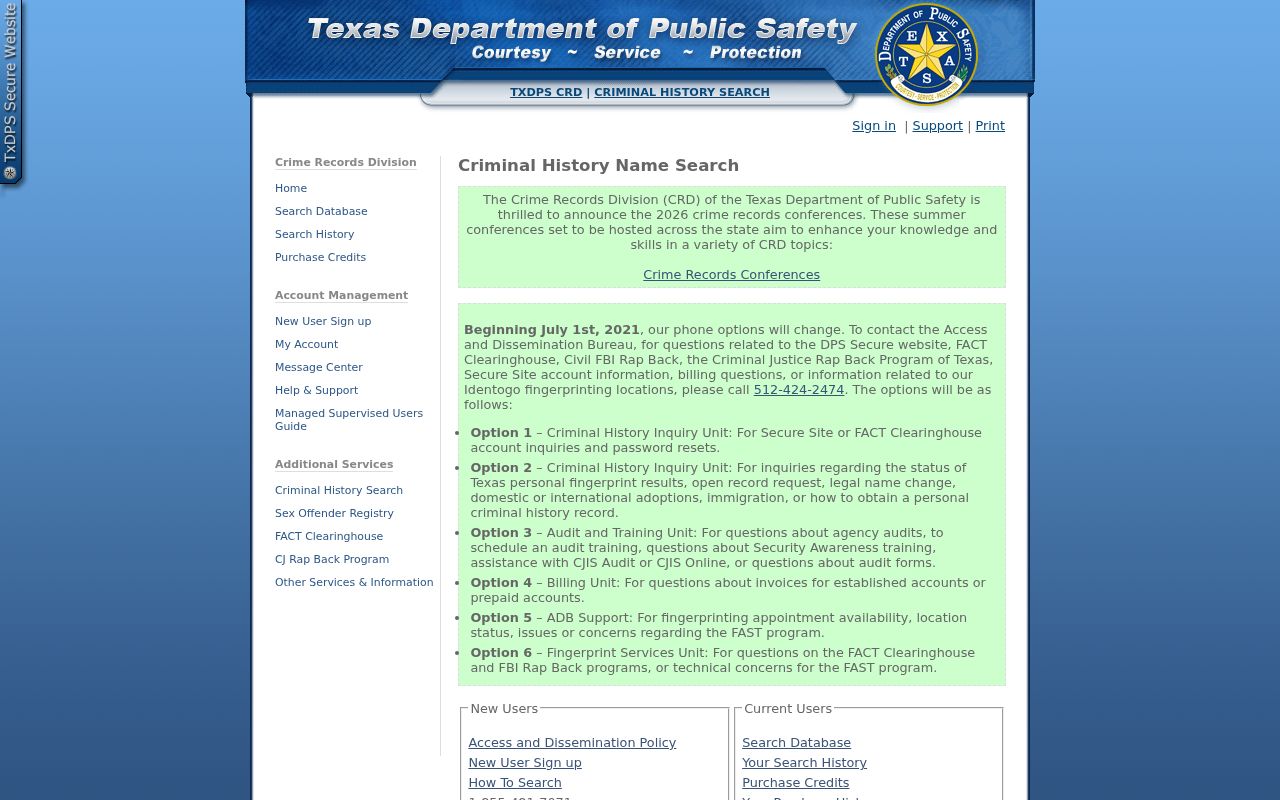
Its public output is narrower than a subject’s fingerprint review and depends on records submitted by Texas criminal-justice agencies.
Types of Criminal Records
Orange County record types reflect the office that creates them. An incident or arrest report describes the alleged event and officer action. The Orange County Jail booking entry tracks intake, charges, bond, and custody. A complaint, information, or indictment states the charge advanced in court. The clerk’s case file then records hearings, pleas, orders, judgment, sentence, and disposition. DPS builds a separate CCH cycle from fingerprint and reporting data.
Warrants can originate in a district, county, municipal, or justice court. Orange County Adult Probation handles local community supervision, while the TDCJ Parole Division handles parole. Custody also splits by level: the Orange County Corrections Facility is local, the TDCJ locator covers state prison, and the federal Bureau of Prisons locator covers federal custody. The Texas Public Sex Offender Registry is another distinct record system, not a general criminal docket.
- Agency reports: request these from OCSO or the city police department that responded.
- Bookings: use the Orange County Jail roster for current local custody and charge details.
- Court cases: use the District Clerk for felonies and County Clerk for Class A or B misdemeanors.
- State history: use DPS name search for public data or fingerprints for your own fuller review.
- Supervision and custody: use the judgment, Adult Probation, TDCJ, or BOP according to the status.
For the filed charge and final judgment, the detailed Orange County criminal court case records route is more useful than a booking entry.
Orange County Clerk Desktop Search
The Orange County online records page has an unusual access limit: its linked system must be used on a desktop computer and is not designed for phones or tablets. A firewall can block the links, and some browsers may need Adobe Acrobat. A blank or error page may therefore reflect the device or network rather than the absence of a criminal record.
When the portal fails, Orange County provides real alternatives. Public computers and index books are available at the County Clerk’s office. A person may also perform a self-search. Staff will search misdemeanor records only through a mailed request with payment, not by phone or email. The published charge is $5 for each defendant name and record type. Plain copies cost $1 per page, and certification adds $5 per document. Give the defendant name, offense, offense date, case number, style, or file date when available.
Older or archived Orange County cases may not have the same digital coverage as newer filings. Sealed records and protected fields also will not display like open cases. Confirm the year and court with the clerk before assuming an empty screen means no record exists.
What an Orange County Criminal Record Shows
There is no single field list for every Orange County criminal record. A Texas CCH cycle emphasizes identity, an arrest tracking number, agency, charges, prosecutor action, court data, disposition, sentence, and later custody or supervision reports. A court file emphasizes filed documents and events. A booking detail instead emphasizes current custody, bond, warrant, and holding-charge facts.
| Name & Identifiers | Legal name, aliases, date of birth, sex, race, SID or FBI number, and fingerprint transaction identifiers when the product permits them. |
|---|---|
| Arrest / Booking Data | Arrest date, agency, booking or offense ID, alleged offense, court, warrant, fine, and bond fields. |
| Charges & Statutes | Booked offense, prosecutor-filed count, code citation, and later amendments, which may not match each other. |
| Disposition | Dismissal, conviction, acquittal, deferred adjudication, or another charge-level outcome. |
| Sentence | Jail or prison term, fine, restitution, or community-supervision terms stated in the judgment. |
| Custody / Supervision | County custody, TDCJ status, community supervision, or parole indicators available through the proper source. |
A dismissal ends a filed charge without a conviction, but it does not erase the related arrest or booking on its own. Deferred adjudication also has a distinct meaning: the court withholds a final conviction while community supervision is completed, subject to the terms and later legal relief.
Orange County Jail and Warrant Records
The Orange County Sheriff’s Office runs the Corrections Facility at 205 South Border Street. Its live roster is free and does not require an account. Results show the roster date, total inmates, 15 rows per page, sorting, pagination, and a details control. Public fields can include the sheriff’s office number, name, full birth date, age, race, gender, offense ID, arrest date, book memo, charge description, warrant number, court, fine, and bond. The roster does not display a mugshot in the inspected detail and does not prove guilt.
Orange County does not advertise a county warrant name-search box. OCSO’s Warrants/Transport Division checks its own felony and Class A or B warrants by phone or email. It cannot check another agency’s warrants and takes no warrant payments. Class C warrants remain with the issuing municipal or justice court. A person trying to resolve an OCSO warrant should confirm the case and booking instructions with the issuing court or counsel.
The official OCSO warrant page preserves the county phone, email, and resolution limits shown here.

The page matters because the county’s warrant channel is direct contact, while a city or JP warrant must be checked with that separate court. Recent custody and booking research has its own timing limits. The fuller Orange County arrest history page explains roster fields, agency report routes, and the court follow-up after release.
Public Access Laws
Texas law separates open government records from confidential criminal history. Under the Texas Public Information Act, a person requests an existing record from the agency that holds it. OCSO cannot be required to obtain an Orange Police Department report, and a clerk does not have to create an answer to a legal question. Active investigations, juvenile files, protected victim facts, dates of birth, license numbers, and other confidential details may be withheld or redacted.
Key Texas laws:
Government Code Chapter 552 gives access to public government information, subject to stated exceptions and prompt-production rules.
Government Code Chapter 411 protects DPS criminal-history data while requiring public access to authorized conviction and deferred-adjudication information.
Code of Criminal Procedure Chapter 66 governs criminal-justice reporting into the state system.
Code of Criminal Procedure Chapter 15 sets Texas warrant and arrest procedures.
The ten-business-day rule is often misread. It commonly sets the time for an agency to seek an Attorney General ruling when it wants to withhold material, rather than guaranteeing that every Orange County record will be delivered within ten days. A focused written request helps the custodian locate an existing record and state any cost or redaction issue.
Federal Records Beyond Orange County
Federal cases are outside the Orange County clerk system. Orange County lies in the Beaumont Division of the Eastern District of Texas, so a federal charge belongs in the U.S. District Court record. PACER requires registration and generally charges $0.10 per page, caps many case-specific documents or reports at $3, and waives a quarter’s charges when the account total is $30 or less. Courthouse-terminal viewing and court opinions have separate free-access rules.
The official PACER service is the federal court record route captured below.
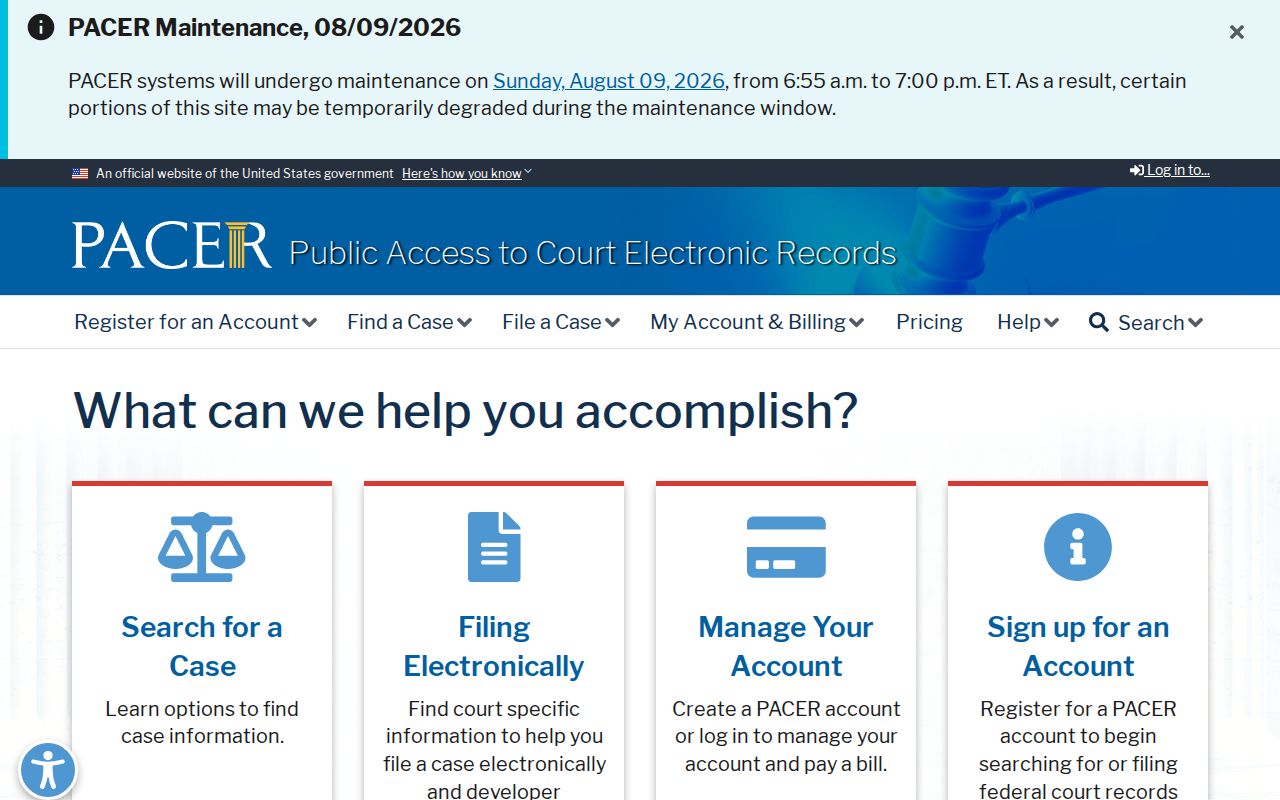
A PACER result should not be expected in the Texas-only DPS public product or the Orange County clerk’s local index.
Federal Self-Review for Orange County
For your own federal identity history, the FBI Electronic Departmental Order portal handles the fingerprint-based request.
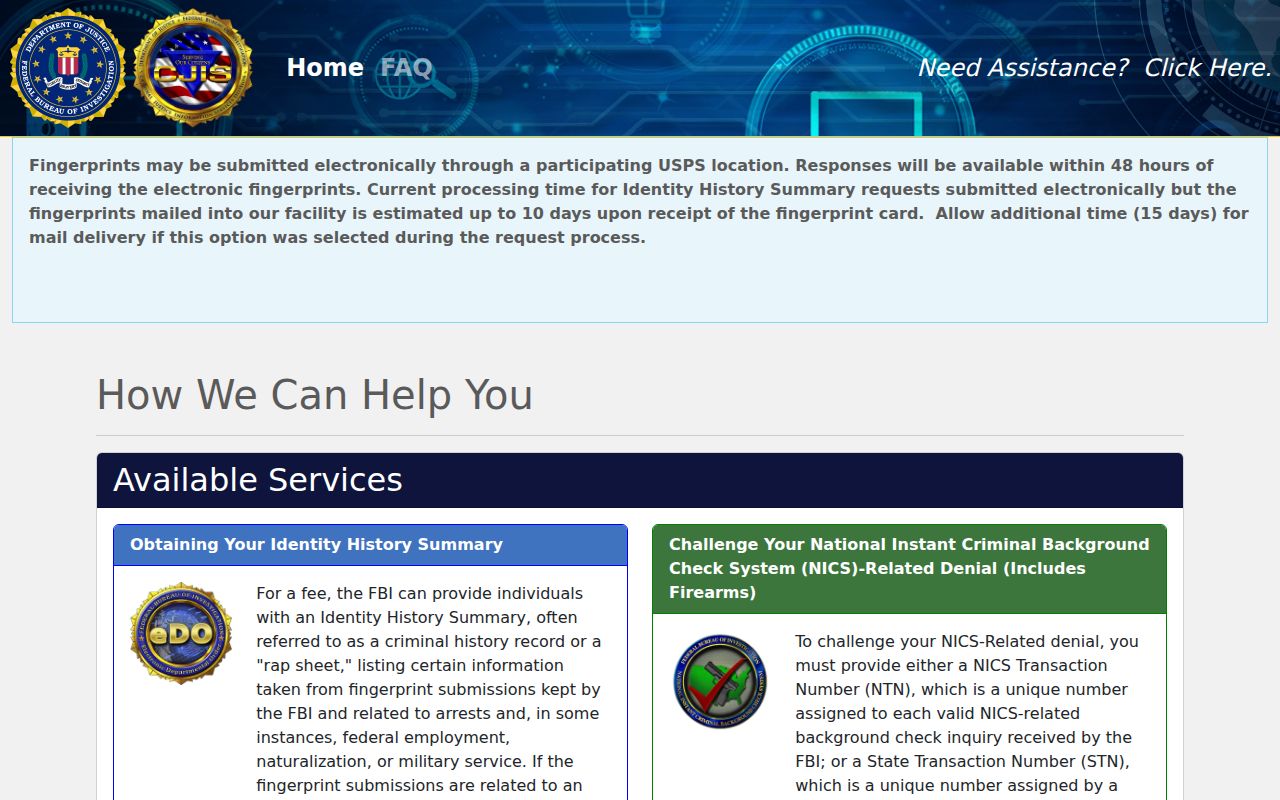
The FBI summary is an identity-history product, not a replacement for certified Orange County judgments or current jail custody data.
Sealed, Expunged & Restricted
Some Orange County records are not available to the general public. Juvenile justice information, protected victim details, sealed cases, expunged matters, and DPS criminal-history information beyond the authorized public product have access limits. Public dockets may redact Social Security numbers, driver’s-license data, financial accounts, birth dates, and protected addresses. An absent online result may mean a delay, archive gap, restriction, or indexing issue rather than proof that no event occurred.
Texas expunction under Code of Criminal Procedure Chapter 55A can direct named custodians to return, delete, or destroy qualifying arrest and court records. Eligibility can arise from an acquittal, pardon, identity misuse, or certain no-charge and dismissal outcomes, but it is fact-specific. The criminal-episode rule and other pending or convicted charges can affect relief. A dismissal by itself does not clear the full Orange County arrest cycle.
An order of nondisclosure is different. It limits ordinary public disclosure while retaining the record for criminal-justice and other recipients listed in law. The right petition depends on the offense, disposition, wait period, prior history, and court. Use the matching official form and confirm the filing process with the Orange County District Clerk.
Orange County Expunction Service Changes
Orange County’s District Clerk published a local service-address resource after a September 1, 2025 change tied to SB 1667. A petition and order now need to account for re:SearchTX and the Office of Court Administration along with the agencies that actually hold records. The list includes OCSO, police departments, justices of the peace, clerks, the prosecutor, DPS, and other possible custodians. It is not exhaustive, so copying every name without tying it to the arrest can be as flawed as leaving a real custodian out.
The Orange County District Clerk expunction page shows the service resource captured below.
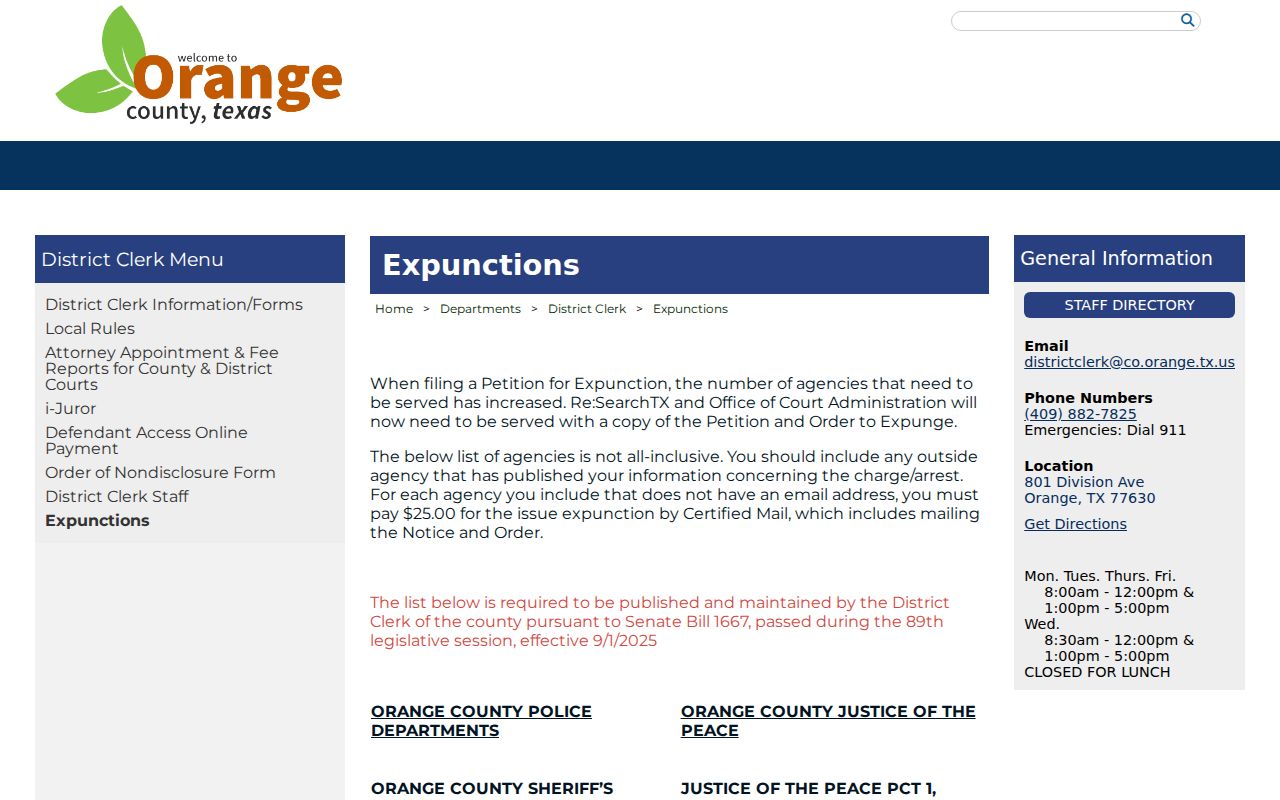
The clerk states that each listed agency without an email requires a $25 certified-mail issuance charge for the notice or order. The full Orange County filing total was not confirmed in the official sources and should be checked with the District Clerk.
A practical file begins with complete arrest, case, and disposition identifiers. After a signed order, obtain certified copies and allow each agency time to process it. If DPS still shows the event, its Error Resolution Unit requires certified court documents for correction.
Orange County Supervision Records
Texas calls probation community supervision. Orange County Adult Probation, the county Community Supervision and Corrections Department, is at 104 Border Street and supervises felony, misdemeanor, deferred-adjudication, bond, interstate, and other local caseloads ordered by the courts. Detailed officer notes and conditions are not a public name lookup. To verify a sentence, start with the judgment and docket, then contact the department with a case number and a specific question about public information.
The official Orange County Adult Probation page supplies the local contact source shown below.
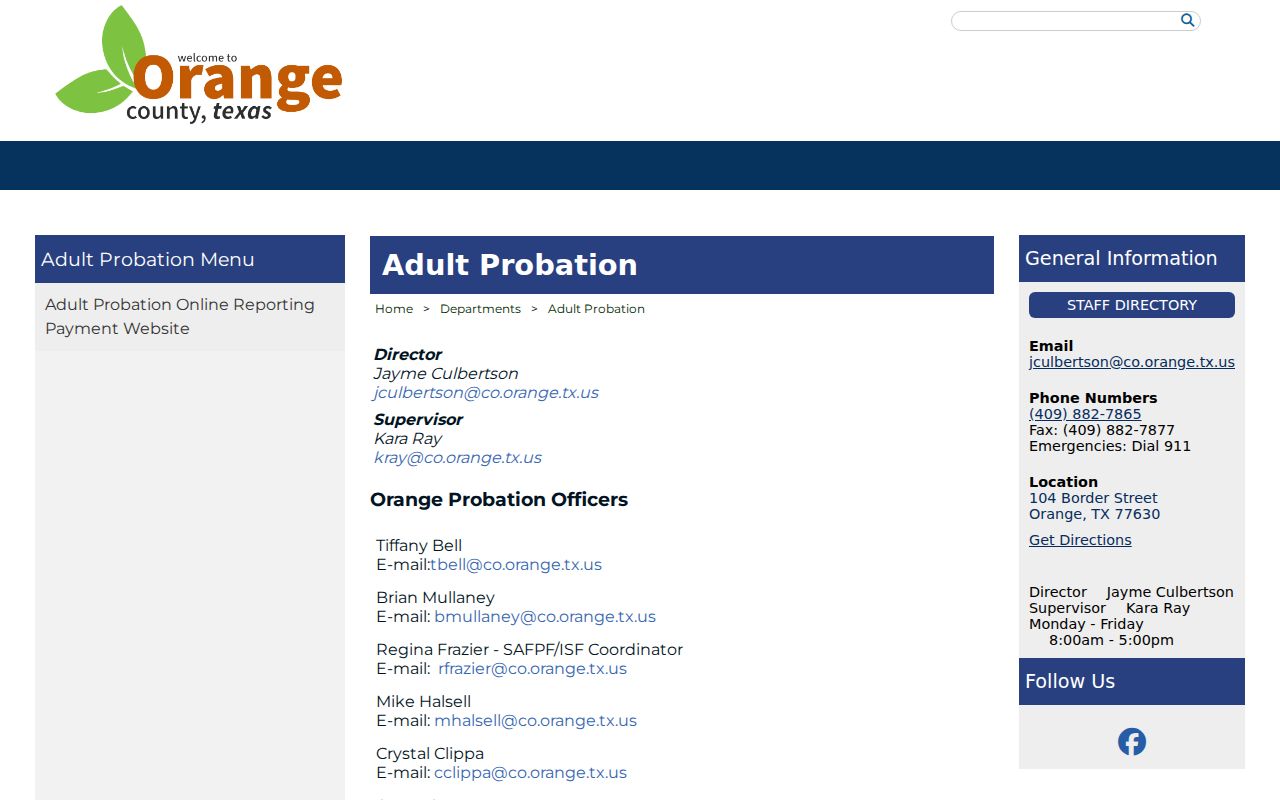
This office handles court-ordered community supervision, not parole from state prison and not the Orange County Jail roster.
Orange County Parole Status Records
Parole release decisions belong to the Texas Board of Pardons and Paroles, while the TDCJ Parole Division supervises releasees. The Orange District Parole Office serves Orange, Jasper, and Newton Counties.
The TDCJ Region I directory confirms the Orange parole office listing captured here.
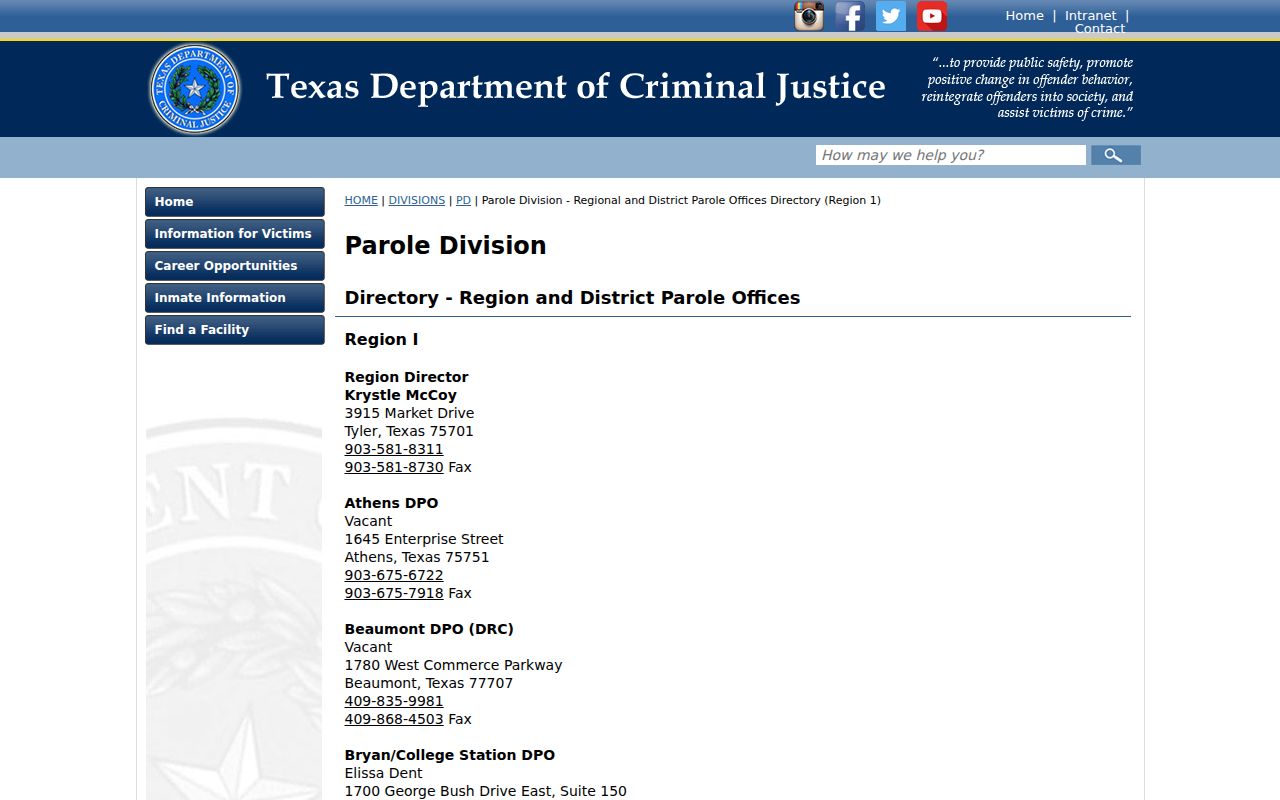
Use the TDCJ inmate locator for state custody and parole indicators, then use the correct state office for status questions.
Criminal Records by City in Orange County
City police departments create their own incident and arrest reports, and municipal courts retain their fine-only cases. Orange County Jail may still hold a city arrestee, while Class A or B misdemeanors and felonies move to the county-level clerks. The 2025 Census estimates rank Orange, Bridge City, and Vidor as the three largest incorporated cities in Orange County. Their local channels differ enough that each city needs its own starting point.
Orange Criminal History
Population 19,419 · Orange PD records and Municipal Court each maintain separate city files.
Bridge City Criminal History
Population 9,645 · Police reports begin with BCPD, while fine-only cases stay at Municipal Court.
Vidor Criminal History
Population 9,597 · Vidor PD accepts direct record requests and its court uses phone, email, fax, or counter access.
The city order follows the official Vintage 2025 estimate. Bridge City ranks just above Vidor in that release, although older counts may reverse them.